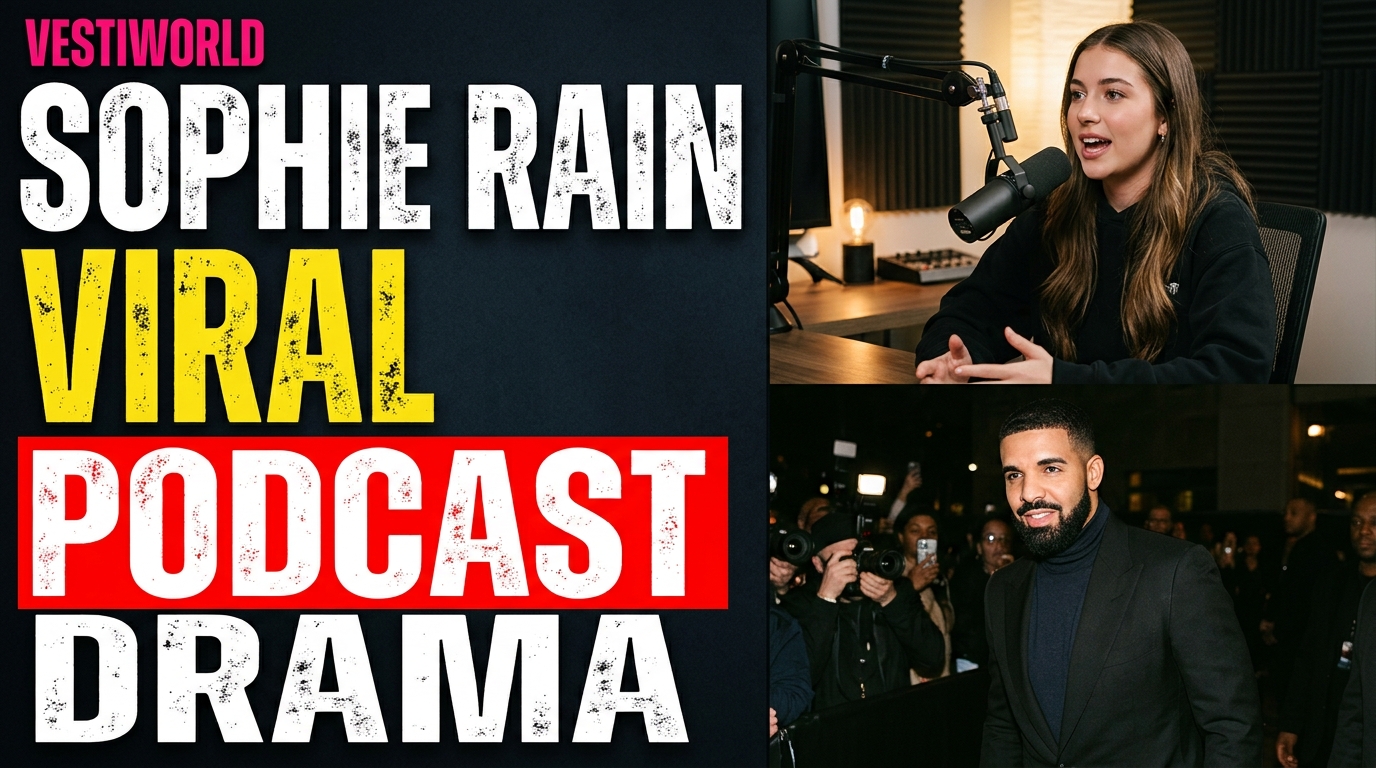

A controversial wave of Sophie Rain Drake clip drama has resurfaced across social media timelines tonight, reigniting a fiery debate over viral influencer culture, unverified celebrity claims, and the aggressive monetization of podcast shock-value. Over the past several hours, short-form video aggregators on X and TikTok have aggressively re-uploaded and amplified an older, highly polarizing podcast interview featuring the popular digital creator. In the widely circulated snippet, Rain makes staggering, unverified personal assertions regarding an alleged high-dollar private encounter and cosmetic surgery rumors surrounding rap superstar Drake, prompting fresh rounds of mockery, fan outrage, and intense timeline warfare between dedicated OVO loyalists and opportunistic internet critics.
The sudden recirculation of this content highlights the peculiar mechanics of modern digital algorithms. As tracked by digital culture reporters at Rolling Stone, controversial podcast clips rarely resurface purely by organic chance; they are routinely recirculated by bot networks and engagement-farming aggregators to harvest millions of automated views during quiet news cycles. However, the sheer absurdity and sensationalism fueling the Sophie Rain Drake clip drama has once again succeeded in commanding mainstream attention, pushing casual hip-hop listeners to question where verifiable industry reporting ends and deliberate internet fiction begins.
This viral recurrence exposes a critical information gap that superficial commentary channels consistently ignore. Beyond the salacious headlines lies a sophisticated, multi-million-dollar digital clout economy where making outrageous, unverifiable claims about A-list superstars has become the single most reliable blueprint for algorithmic fame.
Sophie Rain REVEALED she turned down Drake after he offered her $5 MILLION to hook up at his Janice party. She said she rejected the offer because she wants to keep her virginity. 😳
— ShaiClipped (@ShaiClipped) October 14, 2026
"I told him no because I want to stay a virgin and $5 Million is nothing to me" pic.twitter.com/m5ijzXcNQJ
The Architecture of Outrage: How Podcast Snippets Farm Millions of Views
To comprehend why the Sophie Rain Drake clip drama continues to capture audience attention, one must deconstruct the business model of modern internet talk shows. The digital media landscape has become hyper-fragmented, with thousands of independent podcast studios competing for a limited pool of user attention. In this cutthroat environment, nuanced long-form conversations fail to break through algorithmic recommendation engines; only extreme, scandalous soundbites can reliably achieve viral escape velocity.
Creators and podcast producers understand that associating their brand with an untouchable global icon like Drake mathematically guarantees astronomical impression numbers. In the case of the Sophie Rain Drake clip drama, the interview deliberately layers multiple sensationalist tropes—astronomical financial figures, shocking personal disclosures, and taboo cosmetic rumors—into a thirty-second vertical video engineered for maximum algorithmic distribution. The statements are delivered with casual confidence, completely devoid of receipts, timestamps, or corroborating evidence, relying entirely on the audience’s willingness to believe the most scandalous possible interpretation of celebrity life.
Digital marketing analysts reporting for Billboard point out that the legal burden of proof on social platforms is effectively non-existent. Once a shocking assertion is uttered on camera, it is chopped up into thousands of short-form clips, laundering an unproven rumor into an enduring piece of internet folklore.
The Drake Narrative Industrial Complex: Why Megastars Are Easy Targets
The persistence of the Sophie Rain Drake clip drama cannot be separated from the unique cultural positioning of Drake himself. Throughout his historic, fifteen-year reign at the summit of global hip-hop, the Toronto superstar has been the most memed, scrutinized, and targeted artist in digital history. The public has been conditioned by years of internet satire to view his personal life as an open-source comedy routine, making audiences uniquely receptive to bizarre, exaggerated gossip regarding his private habits.
This vulnerability creates a powerful economic incentive for digital personalities to leverage his name. When an influencer mentions Drake, they are not merely engaging in gossip; they are attaching their personal brand to a massive, global media apparatus that commands billions of monthly impressions. Opposing fanbases and online detractors readily amplify the Sophie Rain Drake clip drama not because they necessarily believe the allegations are true, but because the clip serves as effective ammunition in ongoing digital proxy wars against Drake’s commercial dominance.
For the artist, responding to such claims is an impossible lose-lose proposition. Issuing a formal denial or filing a defamation suit would only grant the influencer international publicity, ensuring that the rumor remains in mainstream headlines for weeks. Consequently, superstar management teams are forced into silence, allowing the rumor to circulate until the internet tires of the spectacle.
The Clout Economy: Monetizing The Illusion of Celebrity Access
A deeper, more troubling dimension of the controversy is what it reveals about the contemporary influencer economy. On platforms where creator fund payouts, brand sponsorships, and paid subscriptions are tied directly to engagement metrics, there are zero financial penalties for spreading fabricated narratives. In fact, the economic incentives actively reward bad-faith storytelling.
The Sophie Rain Drake clip drama illustrates the normalization of fictionalized celebrity encounters as legitimate career currency. Influencers recognize that claiming close proximity to billionaire musicians instantly elevates their perceived social status, transforming an ordinary content creator into a subject of global fascination overnight. Even when commentary channels debunk the claims as mathematically or logistically impossible, the creator retains the millions of newly acquired followers, successfully converting temporary controversy into permanent digital capital.
According to media ethics monitors at Complex, this dynamic is eroding the boundaries of ethical content creation, creating a toxic media environment where younger audiences struggle to distinguish between genuine journalism and calculated performance art.
Sophie Rain releases DMS with CANADIAN rapper Drake of him saying
— clip centra (@clipcentralzn) October 14, 2026
“Hey s*xy if I paid you $10 Million would you give me access to your V-card” 😳
Sophie rain responds with “eww I’m suing you, you weirdo I’m not a Prost!tute I only make special content” pic.twitter.com/D62ZADEjiB
The Exhaustion of Stan Culture: When Drama Ceases to Resonate
Despite the massive view counts generated by the recirculation, a noticeable undercurrent of audience exhaustion has begun to permeate social media discussions. Fans on both sides of the debate are expressing growing irritation with the endless recycling of unproven claims, calling out the viral aggregators for desperately milking old controversies to artificially inflate their engagement numbers.
This backlash suggests that internet consumers are gradually developing an immunity to blatant algorithmic rage-bait. As audiences become more digitally literate, the shock value of wild, unsubstantiated podcast claims begins to diminish, replaced by a cynical awareness that they are simply being manipulated for advertising revenue. The fading credibility of the Sophie Rain Drake clip drama signals a potential turning point where sensationalism without proof no longer guarantees uncritical applause.
Vestiworld Media Forensics: Reclaiming Digital Discernment
The enduring lesson embedded within the Sophie Rain Drake clip drama is an urgent reminder of the necessity of digital skepticism in the modern information age. In an internet ecosystem governed by algorithms that prioritize conflict over truth, accepting shocking soundbites as verified fact is an act of intellectual surrender.
By analyzing the commercial incentives and structural mechanics driving tonight’s controversy, we expose an attention economy that treats truth as disposable and celebrity lives as raw material for viral profit. True media literacy requires recognizing that a viral video clip on TikTok is not an investigative scoop—it is a carefully crafted commercial product designed to capture attention and extract revenue. Until audiences learn to hold digital creators and platforms accountable for the narratives they amplify, the podcast rumor machine will continue to thrive, proving that on the modern internet, the most valuable commodity is not the truth, but the audacity to tell a convincing lie.
For More Stories :
K-Pop Industry Grammy Category Boycott: The Global Power Play Shaking The Recording Academy
Sydney Sweeney Novig Ad Backlash: Inside The Controversial Campaign Shaking Sports Media
Brooklyn Beckham Nicola Peltz Paris PDA: The Eiffel Tower Kiss That Deepened The Family Rift
Olivia Rodrigo Fans Drama Shift: Why Livies Are Abruptly Abandoning The Taylor Swift Feud
Diddy Kanye West Leaked Texts: The Shocking Tense Exchanges That Preceded The Fall