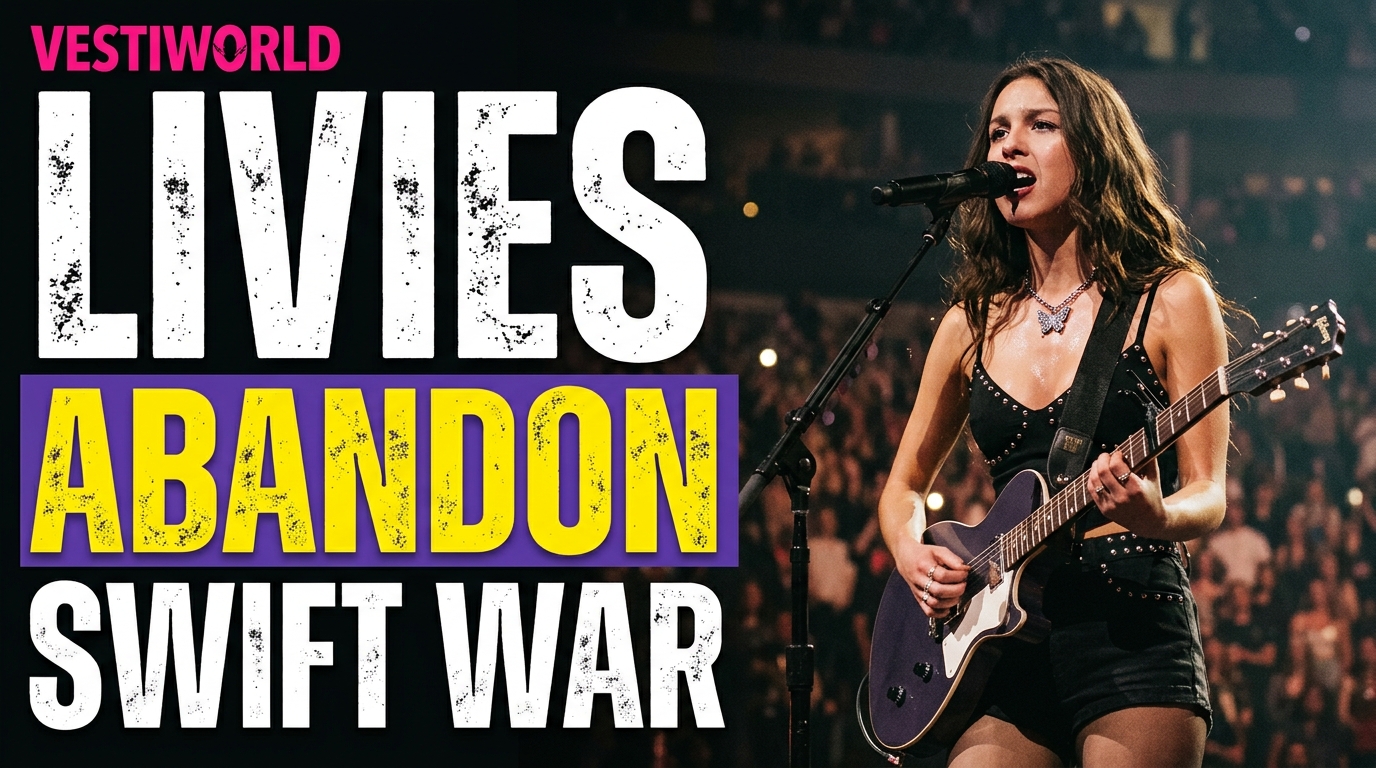

An unexpected and fascinating Olivia Rodrigo fans drama shift has swept through the battle-hardened trenches of stan Twitter tonight, signaling a sudden, calculated de-escalation in pop music’s longest-running digital cold war. For nearly three years, the bitter friction between “Livies” and “Swifties” operated as the definitive, daily bloodsport of online fandom a relentless, exhausting cycle of streaming boycotts, passive-aggressive chart comparisons, and endless debates over writing credits and perceived industry sabotage. However, over the past several hours, a coordinated, widespread movement among Olivia Rodrigo’s most prominent fan hubs has emerged, declaring a definitive end to their engagement with the Swiftie empire and actively hunting for fresh territory.
The catalyst for this sudden armistice arrived following a week of escalating mutual destruction, where both fandoms traded deeply disturbing, fabricated group-chat screenshots containing doctored threats, toxic slurs, and malicious harassment campaigns. As the conflict devolved from petty pop music banter into genuine digital defamation requiring legal warnings from major label representatives, the older, more strategic factions of the Livie fanbase officially called for an unconditional retreat. Prominent update accounts that once racked up tens of thousands of quote-tweets dragging rival releases are now openly labeling the feud “childish, embarrassing, and counterproductive,” urging followers to redirect their collective energy toward more winnable cultural skirmishes.
This abrupt pivot exposes a massive information gap that conventional pop culture observers consistently fail to recognize. Digital stan armies do not dismantle themselves when a feud ends; they operate like restless, hyper-militarized digital institutions that must immediately identify a new external enemy to preserve their collective identity and algorithmic velocity.
Record and Song of the Year Grammy Predictions: With Ella Langley, Taylor Swift, the Two Olivias and Other Frontrunners in the Race, Expect a Nail-Biter https://t.co/iHqS1XTxeL
— Variety (@Variety) October 12, 2026
The Exhaustion Threshold: When Fake Screenshots Broke The War Machine
To understand why the Livie high command called for a strategic pivot, one must examine the toxic collapse of the Swiftie-Livie war over the past seventy-two hours. What began as a spirited creative rivalry between a generational pop titan and her former idol-turned-contemporary crossed an unforgivable ethical line when rogue factions on both sides began manufacturing forged Telegram and Discord logs. When fanbases start circulating fabricated chats accusing real people of severe digital crimes simply to win an argument about Billboard sales, the risk of real-world legal and institutional consequences becomes overwhelming.
Inside private fandom group chats, senior account admins reportedly recognized that the prolonged war with Swifties had reached an exhaustion threshold. Swifties represent the largest, most financially organized, and algorithmically dominant demographic on the internet; attempting to engage them in a war of attrition is mathematically impossible for a younger, smaller fandom. Every retaliatory thread only served to elevate Swiftie engagement while distracting from Rodrigo’s own historic artistic achievements.
By declaring the feud obsolete, Livie leaders are executing a classic strategic withdrawal, attempting to cleanse their digital reputation before the toxicity permanently tarnishes their idol’s wholesome, rock-tinged public brand.
The Search For A New Adversary: Where Does The War Machine Go Next?
The critical sociological reality of modern internet culture is that a mobilized stan community cannot exist in a state of peace. The entire architecture of fan Twitter—from viral quote-tweet ratios to engagement monetization—is built on conflict, tribalism, and collective defense. Without a declared rival to mobilize against, follower engagement plummets, community cohesion fractures, and accounts lose their cultural relevance.
Consequently, the Olivia Rodrigo fans drama shift has immediately triggered a frantic search for a new, appropriately sized sparring partner. Early telemetry across music forums indicates that attention is rapidly drifting toward other rising female contemporaries. Factions are already testing the waters with subtle provocations aimed at the fanbases of Sabrina Carpenter, Billie Eilish, and Chappell Roan. The objective is to identify a rival whose demographic scale and chart proximity offer a competitive, high-stakes battleground without the suffocating, unwinnable gravity of the Swiftie juggernaut.
This search for fresh friction proves that modern stan culture is fundamentally about the thrill of collective digital warfare rather than pure appreciation for the music itself.
The Generational Divide: Gen Z Authenticity vs. Millennial Monoliths
Beneath the tactical retreat lies a deeper, irreconcilable generational divide. Olivia Rodrigo’s core audience represents the vanguard of Gen Z—a generation that deeply values perceived vulnerability, raw messy emotions, and subcultural anti-establishment aesthetics. Their initial attraction to Rodrigo was rooted in her willingness to scream over distorted guitars and write candidly about heartbreak without corporate polish.
Taylor Swift’s dominant demographic, by contrast, is anchored in millennial perfectionism—a meticulously planned, corporate-backed empire built on easter eggs, vinyl variants, and commercial conquest. For years, Livies attempted to fight Swifties on the terrain of commercial metrics, obsessing over Spotify debuts and radio spins. However, Gen Z fans have begun to realize that playing the numbers game against an untouchable billionaire institution is a rigged system that alienates their own subcultural identity.
By stepping away from the Swiftie feud, Livies are attempting to reclaim their artistic individuality, shifting the narrative away from corporate dominance and back toward alternative authenticity.
De-Escalation as Growth: The Maturation of a Fandom
While cynics view the pivot as mere strategic maneuvering, a more optimistic reading suggests that the Livie fanbase is simply experiencing the natural maturation that every legendary artist’s following must eventually undergo. When an artist first emerges—as Rodrigo did with the explosive arrival of “drivers license”—the fandom is defined by insecure, hyper-defensive territorialism, desperate to prove that their new star belongs at the adult table.
Three years later, Rodrigo is a multi-Grammy-winning arena headliner with critical acclaim that rivals any veteran in the industry. Her commercial and artistic legitimacy is no longer up for debate; it is an established historical fact. As a fandom matures, the pathological need to respond to every piece of online bait begins to fade, replaced by a self-assured confidence that lets the art speak for itself.
The conscious decision by prominent fan accounts to reject toxic mudslinging signals an encouraging step toward digital literacy, proving that fanbases can, in rare instances, choose collective mental health over algorithmic self-destruction.
Vestiworld Sociological Dossier: The Infinite Cycle of Stan Warfare
The fascinating phenomenon behind the Olivia Rodrigo fans drama shift serves as a mirror reflecting the broader psychological mechanics of our hyper-connected digital world. In a culture increasingly defined by loneliness and fragmentation, online fandoms offer young people a powerful sense of community, purpose, and collective belonging. Yet, the platforms that house these communities are fundamentally engineered to extract profit from division, continuously feeding them fresh grievances to keep them locked in digital combat.
By choosing to walk away from their most defining rivalry tonight, Livies have performed a rare, defiant act of algorithmic disobedience. Whether they will successfully sustain that peace or quickly succumb to the temptation of a new conflict remains to be seen. But for one brief, extraordinary moment in pop culture history, a digital army looked into the abyss of toxic stan warfare, recognized its ultimate futility, and chose to put down its weapons.
For More Stories :
Drake Insider Leak Drama: The Brutal OVO Mole Purge That Has The Camp Terrified
Taylor Swift Travis Kelce Ohio Neighbor Backlash: How A $5.3M Sewer Dispute Shattered A Quiet Suburb
Taylor Swift Chart Dominance War Sends Internet Into Complete Meltdown
Kim Kardashian Lewis Hamilton Singapore Appearance Sends Internet Into Complete Meltdown