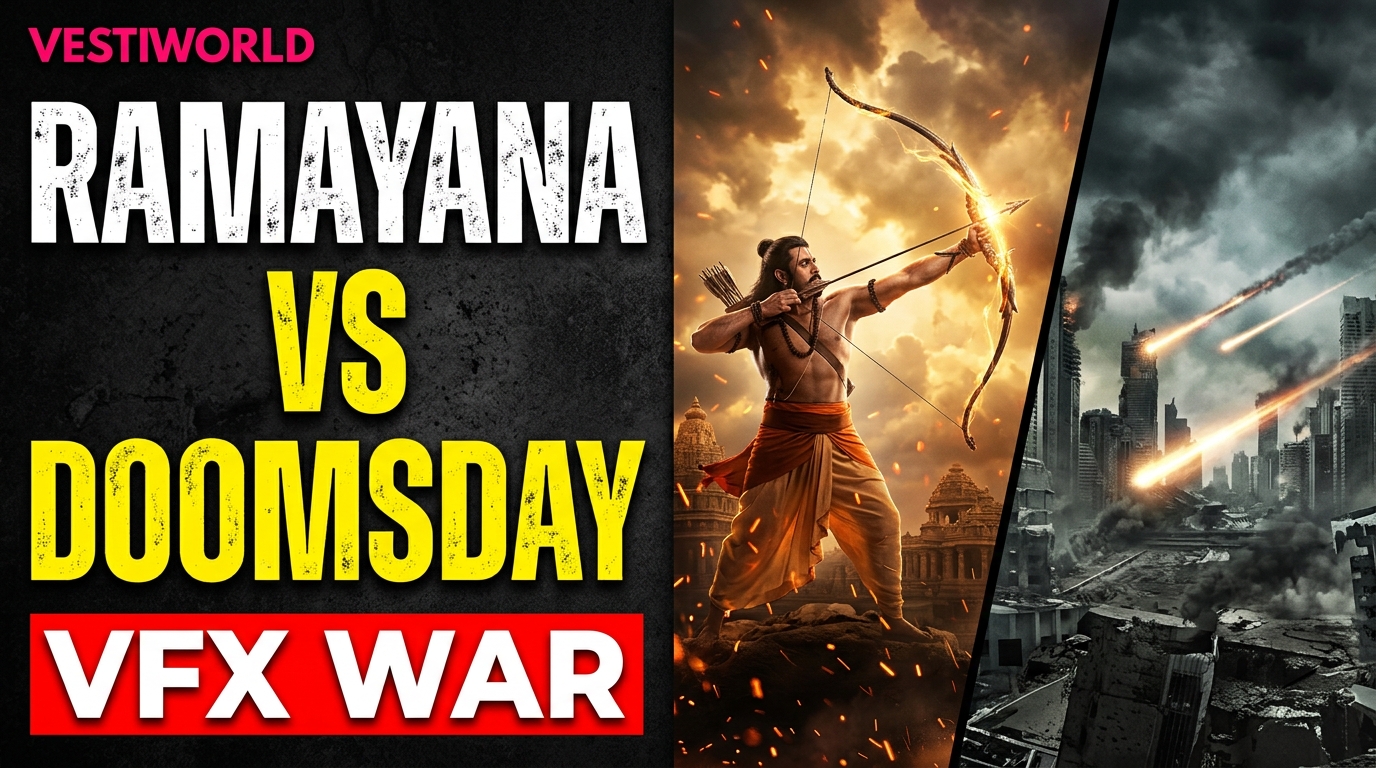

A fierce geopolitical aesthetic clash has erupted across social media tonight as film enthusiasts intensely debate the Ramayana Avengers Doomsday visuals. Over the past several hours, a viral post on X asserting that the visual effects and grand mythological production design of Nitesh Tiwari’s upcoming Indian cinematic epic Ramayana are “far superior” to Hollywood’s billion-dollar powerhouse Avengers: Doomsday has captured hundreds of thousands of impressions. The bold declaration has ignited widespread retaliation from loyal Marvel fanbases, while championing proponents of modern Indian cinema insist that Eastern visual storytelling is officially overtaking Hollywood’s aging cinematic supremacy.
The explosive discourse surrounding the Ramayana Avengers Doomsday visuals represents a fascinating inflection point in global film production. As documented in international entertainment coverage by Variety, Indian blockbuster filmmaking has experienced an unprecedented global renaissance following the worldwide triumphs of RRR and Kalki 2898 AD. Backed by a historic reported budget and world-class digital visual artists, Ramayana—starring Ranbir Kapoor and Sai Pallavi—aims to set a new benchmark for mythological scale. However, positioning its pre-release aesthetic directly against Marvel Studios’ flagship crossover event has transformed a technical comparison into an all-out cultural battleground between traditional Western hegemony and the rising creative powerhouse of South Asian cinema.
This viral confrontation exposes a critical narrative gap that standard film review sites often overlook. The true debate is not simply about polygon counts or CGI fidelity; it is an ideological dispute about how cultural mythology, narrative reverence, and digital craftsmanship resonate with modern moviegoers who are visibly tired of homogenized Hollywood templates.
Mankind’s greatest story comes to life. (HINDI)
— Ramayana: Rise of a Legend (@Ramayana_Intl) October 15, 2026
From the visual artists behind The Odyssey and Dune watch the new trailer for RAMAYANA: RISE OF A LEGEND – exclusively in theatres, IMAX and Premium Large Formats worldwide November 5. Tickets on Sale now. pic.twitter.com/fk4sG0LZYz
Scale Meets Reverence: Deconstructing The Ramayana Avengers Doomsday Visuals
To comprehend why the Ramayana Avengers Doomsday visuals sparked such fervent debate, one must examine the contrasting aesthetic philosophies governing both productions. For Marvel Studios, visual effects are largely deployed to render fantastical urban destructions, multiversal portal mechanics, and high-tech alien combat. While technically advanced, film historians writing for The Hollywood Reporter note that recent Hollywood blockbusters have faced severe audience criticism for rushed post-production schedules, murky compositing, and overly synthetic color palettes.
In contrast, the digital canvas of Ramayana is steeped in centuries of sacred mythological heritage. The production design blends sprawling physical architectural sets with photorealistic creature concepts, divine golden lighting, and ancient cosmic warfare. Supporters of the Indian epic argue that the Ramayana Avengers Doomsday visuals showcase a deeper soul and visual reverence: the digital environments are crafted not just to provide explosive background noise, but to elevate a timeless spiritual epic into an awe-inspiring theatrical odyssey.
When fans placed concept previews and production stills side-by-side on X, the vibrant, golden grandeur of Tiwari’s ancient mythological kingdom contrasted sharply with the desaturated digital landscapes that have characterized recent MCU battle sequences.
The VFX Industry Crisis: Hollywood’s Bottleneck vs. Global Collaboration
Behind the fiery social media discourse lies a genuine structural reality in modern VFX production. Hollywood’s premier studios have wrestled with severe visual effects bottlenecks, with artists publicly speaking out against relentless deadline crunch and last-minute creative overhauls by studio executives. These systemic pressures have directly affected the perceived quality of Western blockbuster releases.
Industry insiders at Deadline reveal that Ramayana has deliberately sought to avoid these corporate pitfalls by partnering with top-tier international visual effects houses, including Oscar-winning VFX powerhouse DNEG led by Namit Malhotra. This strategic collaboration pairs global technical expertise with deeply personal cultural storytelling. Consequently, the discussion around the Ramayana Avengers Doomsday visuals reflects an evolving reality: Hollywood no longer holds an exclusive monopoly on cutting-edge digital wizardry.
When top-tier digital talent collaborates directly with visionary Eastern directors, the resulting imagery commands an aesthetic parity and in some eyes, a clear superiority over multi-hundred-million-dollar American franchise sequels.
In terms of VFX, the biggest movies of this year rank like this:
— Gmaxi 👑 (@yogesh123122) October 15, 2026
Ramayana > Dune: Part Three > Avengers: Doomsday > Godzilla pic.twitter.com/aFIbrjDC8h
The Marvel Counterattack: Defending The Crown
Predictably, the suggestion that an Indian production could outshine Marvel’s crowning Multiverse Saga finale provoked immediate pushback from Western pop culture defenders. Marvel loyalists argued that evaluating the Ramayana Avengers Doomsday visuals before either film has debuted a full official theatrical trailer is fundamentally disingenuous. Commentators pointed out that the Russo Brothers possess an unmatched track record in delivering monumental cinematic climaxes, having directed both Avengers: Infinity War and Avengers: Endgame.
Defenders of the MCU maintained that Marvel’s strength lies in seamless kinetic motion, complex character choreography, and the emotional resonance of dozens of interconnected heroes sharing a single screen. Skeptics questioned whether Ramayana could sustain its visual fidelity during high-intensity combat sequences or if its ambition might buckle under the weight of excessive green-screen environments.
This digital skirmish illustrates how fiercely modern audiences protect their preferred cinematic institutions, treating blockbuster releases as proxy tournaments for cultural prestige.
The Decentralization of Global Cinema
Beyond the partisan fandom battles, the heated debate over the Ramayana Avengers Doomsday visuals highlights a permanent realignment in worldwide entertainment. For decades, Western audiences dictated global taste, treating foreign productions as regional novelties while Hollywood dominated international multiplexes with absolute authority.
Today, streaming distribution, technological democratization, and soaring national pride have empowered non-English film industries to compete on the grandest cinematic stages imaginable. The intense interest in the Ramayana Avengers Doomsday visuals confirms that global moviegoers are actively evaluating Eastern cinema against Hollywood’s highest standards without condescension or hesitation.
Whether audiences favor the divine golden radiance of ancient Ayodhya or the reality-shattering multiverse of Doctor Doom, the sheer existence of this comparison proves that Hollywood’s solitary reign as the unchallenged king of cinematic scale is officially over.
La historia más grande de la humanidad cobra vida.
— SonyPicturesMX (@SonyPicturesMX) October 15, 2026
De los artistas visuales detrás de La Odisea y Duna, descubre el tráiler de RAMAYANA: EL NACIMIENTO DE UNA LEYENDA.
12 de noviembre – Exclusivamente en cines y Formatos Premium. pic.twitter.com/Xomd55bOv3
Vestiworld Cinematic Appraisal: The New Frontier of Epic Filmmaking
The viral frenzy surrounding the Ramayana Avengers Doomsday visuals offers an invigorating glimpse into the future of global entertainment. Competition drives creative evolution, and Hollywood’s long-standing complacency is now facing an unprecedented challenge from bold, ambitious international filmmakers who refuse to accept secondary status.
Rather than viewing this debate as a zero-sum conflict, cinephiles should celebrate this historic collision of creative ambitions. As the Ramayana Avengers Doomsday visuals continue to dominate online feeds, one truth is indisputable: the bar for what defines a true cinematic masterpiece has been permanently elevated. In this new global arena, the victor will not be determined by Hollywood pedigree or corporate marketing budgets, but by whichever creative vision manages to move the heart and dazzle the eyes of the worldwide audience.
For More Stories :
Sophie Rain Drake Clip Drama: Inside The Viral Podcast Machine Weaponizing Hip Hop Rumors
Enty Blind Item 12 Disney: Inside The Dangerous Online Hunt Shaking Hollywood
K-Pop Industry Grammy Category Boycott: The Global Power Play Shaking The Recording Academy
Sydney Sweeney Novig Ad Backlash: Inside The Controversial Campaign Shaking Sports Media
Brooklyn Beckham Nicola Peltz Paris PDA: The Eiffel Tower Kiss That Deepened The Family Rift