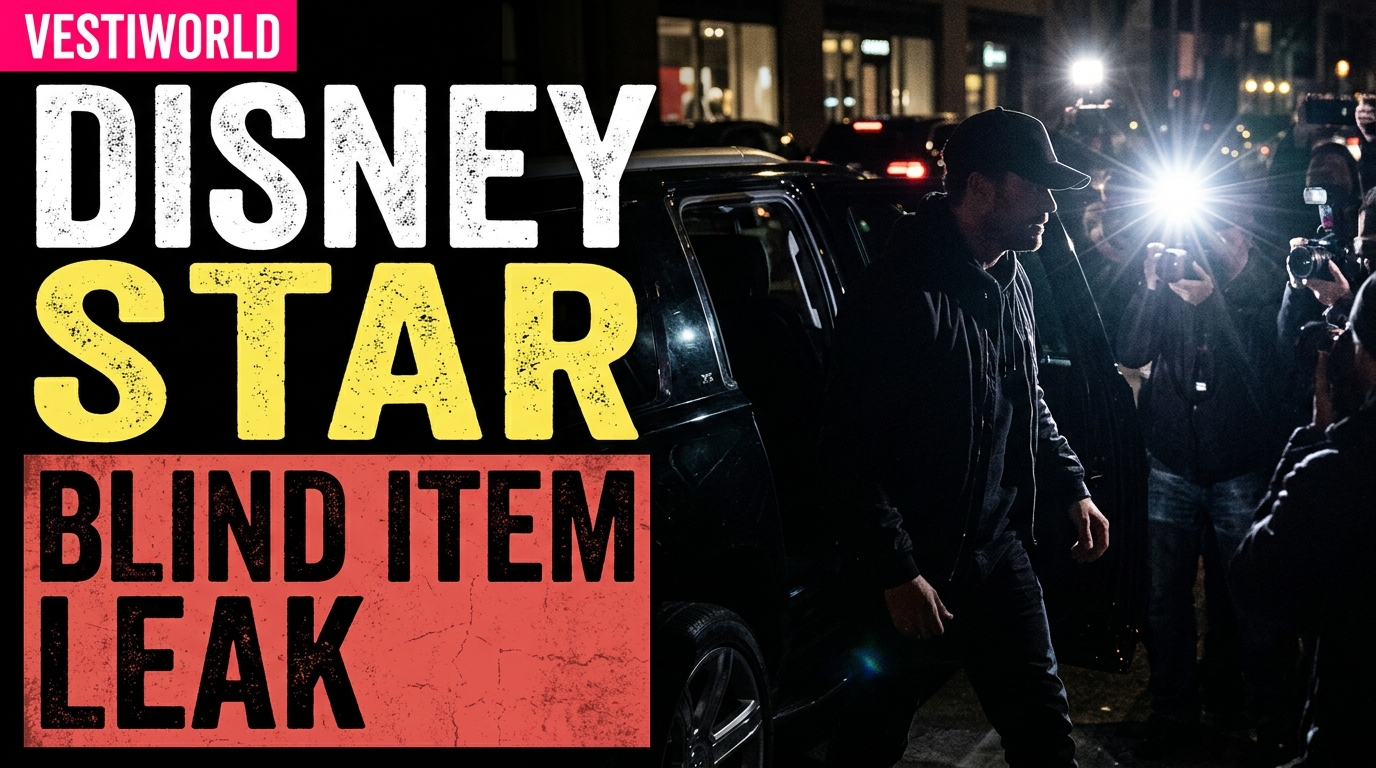

An extraordinary digital manhunt has erupted across social media tonight following the publication of the explosive Enty Blind Item 12 Disney report. Posted by the enigmatic, long-running gossip account Crazy Days and Nights, the cryptic disclosure alleges shocking personal misconduct, hidden lifestyle controversies, and reckless private behavior surrounding an unnamed former child star who successfully transitioned into modern A-list status. Within minutes of going live on X, entertainment timelines were completely overwhelmed as amateur internet detectives, pop culture commentators, and stan communities began feverishly cross-referencing filmographies, former network contracts, and public appearance timelines to guess the identity behind the curtain.
The intense velocity of this viral storm demonstrates the chaotic mechanics of modern internet gossip. As tracked by entertainment media analysts at The Hollywood Reporter, anonymous blind items have evolved from niche industry curiosities into hyper-monetized digital events capable of driving millions of impressions. However, the specific allegations embedded within the Enty Blind Item 12 Disney post have crossed far beyond standard celebrity relationship rumors. By deploying extreme, highly defamatory characterizations without verified evidence or official attribution, the post has sparked a volatile clash between voyeuristic curiosity and serious questions regarding digital ethics.
This unfolding controversy exposes a massive information gap that conventional celebrity publications deliberately avoid discussing. The real issue driving tonight’s chaos is not simply the identity of an anonymous actor; it is the unchecked power of the online blind item industrial complex, which weaponizes anonymous innuendo to inflict reputational damage while hiding behind legal ambiguity.
October 14, 2026
— Enty (@entylawyer) October 14, 2026
Blind Items Revealed #3
September 28, 2026
The team behind the first round NFL player have told him to stay far far far away from the podcaster who spells the name incorrectly.
Fernando Mendoza/Alix Earle pic.twitter.com/EiaaJjGQwl
The Architecture of Innuendo: Deconstructing The Viral Post
To understand why the Enty Blind Item 12 Disney post provoked such immediate frenzy, one must analyze the precise linguistic mechanics of anonymous gossip. Blind items operate by providing just enough biographical scaffolding—such as former network affiliations, career trajectories, and commercial tiers—to allow readers to project their own suspicions onto real-world figures. The text deliberately avoids naming names, granting the author legal plausible deniability while leaving the audience to perform the collective work of digital defamation.
In this instance, the Enty Blind Item 12 Disney narrative targeted a specific, beloved archetype: the former child star who achieved mainstream Hollywood prestige. This demographic has long occupied a vulnerable space in the public imagination, often associated with intense industry pressure and turbulent transitions into adulthood. By attaching extreme behavioral claims to this recognizable narrative arc, the blind item created an irresistible puzzle for internet sleuths eager to uncover a hidden scandal behind a polished celebrity facade.
However, media ethics experts reporting for Variety warn that this crowdsourced guessing game is structurally reckless. Once an allegation enters the digital ecosystem, casual users treat speculative theories as verified fact, permanently associating innocent actors with scandalous claims without a single shred of corroborating documentation.
The Digital Manhunt: Why Amateur Sleuthing Crosses The Line
Within an hour of the drop, search trends across X and TikTok were flooded with names of prominent young leading men who fit the general profile outlined in the post. Stan factions began weaponizing the Enty Blind Item 12 Disney speculation against rival fanbases, clipping unrelated red carpet interviews and out-of-context video snippets to frame opposing stars as guilty parties.
This crowd-sourced interrogation highlights the terrifying speed of algorithmic mob justice. In traditional journalism, severe personal allegations require exhaustive fact-checking, multiple on-the-record sources, and rigorous legal vetting before publication. The blind item economy bypasses all editorial standards, allowing unverified tips—often submitted by anonymous trolls or disgruntled associates—to circulate unchecked. The resulting digital manhunt does not seek truth; it seeks validation for pre-existing biases and algorithmic engagement.
The danger of this dynamic is profound. Even if the original poster retracts the item or clarifies the hints, the digital footprint remains indelible, demonstrating how easily anonymous accounts can poison public discourse under the guise of insider truth-telling.
October 14, 2026
— Enty (@entylawyer) October 14, 2026
Blind Items Revealed #5
September 28, 2026
This 1/100th needs to not only win his election but also make sure this candidate wins for state A++ lister. It is the only way the 1/100th can run for the A++ lister job. Unfortunately, the wannabe state A++ lister is… pic.twitter.com/LSaX5tObb6
The Legal Tightrope: How Anonymous Gossip Evades Consequences
A central reason the Enty Blind Item 12 Disney phenomenon continues to thrive is the unique legal gray area governing anonymous online publishing. Libel and defamation laws in the United States place an exceptionally high burden of proof on public figures, who must demonstrate “actual malice” and prove that a defamatory statement was made with reckless disregard for the truth. Because blind items omit specific names, pursuing legal recourse is extraordinarily difficult and often counterproductive.
Entertainment attorneys speaking to Deadline consistently note the Streisand Effect inherent in responding to anonymous gossip: the moment an A-list actor files a lawsuit or issues a formal denial regarding a blind item, they inadvertently confirm that the description matches them, amplifying the controversy tenfold. As a consequence, high-profile management teams are forced into silence, watching from the sidelines as unsubstantiated rumors circulate across millions of mobile screens.
This legal vulnerability allows anonymous creators to monetize sensationalism with near-total impunity, extracting advertising revenue and subscriber fees from manufactured outrage while leaving the subjects of their posts completely unprotected.
The Psychological Appetite for Celebrity Destruction
Beyond the legal and technical mechanics lies a darker psychological reality: the public’s insatiable appetite for the moral downfall of the rich and famous. In an era marked by extreme economic inequality and widespread disillusionment with traditional institutions, tearing down high-profile icons provides audiences with a temporary sense of leveling the playing field.
The fascination surrounding the Enty Blind Item 12 Disney post reflects this cultural cynicism. Rather than questioning the credibility of an unverified anonymous blog, readers readily embrace the darkest possible narratives about public figures. The assumption that behind every successful career lies a secret, debauched reality has become the default setting of modern pop culture consumption, revealing as much about the anxieties of the audience as it does about the realities of Hollywood.
As social media continues to blur the line between entertainment and collective harassment, consuming unverified blind items as casual amusement carries real ethical consequences that audiences can no longer comfortably ignore.
October 14, 2026
— Enty (@entylawyer) October 14, 2026
Blind Items Revealed #1
September 26, 2026
The alliterate reality star is dropping hints she is going to be cast in the gossip show everyone loves to talk about.
Kim Kardashian/Bridgerton pic.twitter.com/JuYzpolECt
Vestiworld Cultural Dispatch: The Urgent Need For Digital Literacy
The viral explosion ignited by the Enty Blind Item 12 Disney report serves as an urgent wake-up call for how we engage with internet information. In an ecosystem dominated by engagement algorithms that reward sensationalism over accuracy, accepting anonymous innuendo as truth is a dangerous concession to digital chaos.
By forensically deconstructing the mechanics of tonight’s controversy, we pull back the curtain on an industry that trades in fabricated scandal for programmatic profit. True cultural literacy requires recognizing that an unverified post on an anonymous blog is not an insider exposé—it is an unproven narrative designed to exploit public curiosity. Until audiences learn to demand verifiable proof and reject crowdsourced defamation, the blind item machine will continue to dictate cultural headlines, proving that in the digital age, a carefully planted whisper can be far more destructive than the truth.
For More Stories :
K-Pop Industry Grammy Category Boycott: The Global Power Play Shaking The Recording Academy
Sydney Sweeney Novig Ad Backlash: Inside The Controversial Campaign Shaking Sports Media
Brooklyn Beckham Nicola Peltz Paris PDA: The Eiffel Tower Kiss That Deepened The Family Rift
Olivia Rodrigo Fans Drama Shift: Why Livies Are Abruptly Abandoning The Taylor Swift Feud
Diddy Kanye West Leaked Texts: The Shocking Tense Exchanges That Preceded The Fall