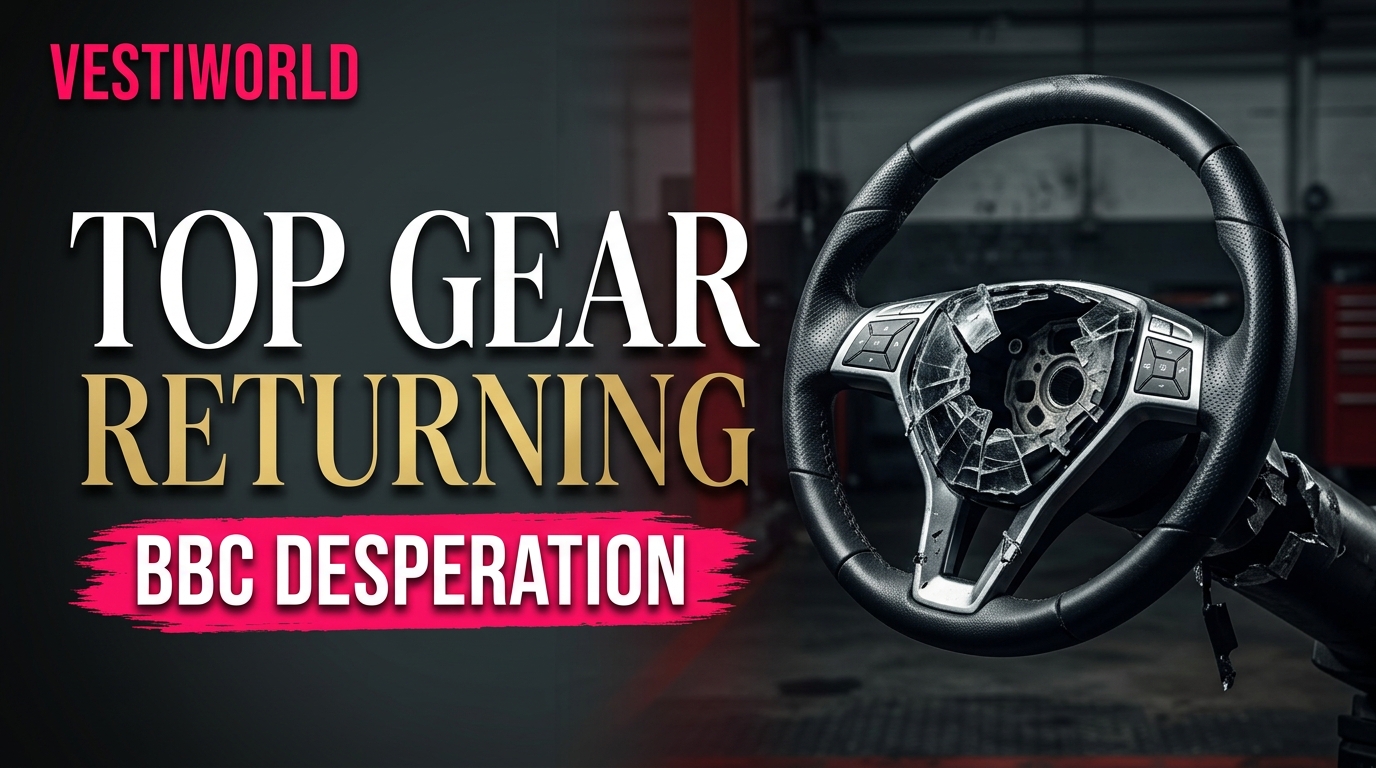

Top Gear returning new hosts rumors are completely taking over the television industry today after BBC executives officially announced the revival of the iconic motoring show. For the last four years the internet has entirely assumed the franchise was dead following a catastrophic production accident. Treated as a triumphant return for one of the most beloved television brands in history this announcement seems like a massive victory. Treated as what it actually is a highly calculated act of sheer financial desperation from a legacy network struggling to survive the streaming era the story completely changes.
This afternoon at the Edinburgh TV Festival network bosses confirmed that the show is coming out of its extended hiatus. Fans immediately started speculating on casting while industry insiders noted the incredible legal and safety hurdles the production will have to overcome. The hashtag dominated global trending charts within minutes.
Both images are true at once. The brand still carries massive global weight and the fans are genuinely excited. But the sheer timing of this revival reveals a brutal economic reality. Together they explain exactly why the biggest broadcasting corporation in the United Kingdom is willing to risk millions in insurance liabilities just to get a car show back on the air.
🚗 TOP GEAR IS COMING BACK
— Emmanuel – Big Tech & AI Investor (@EmmanuelInvest) August 27, 2026
The BBC has confirmed Top Gear will return to TV, four years after the show was put on hold following Andrew “Freddie” Flintoff’s serious crash during filming in 2022.
The big question now: who will host it?
No presenters have been confirmed yet,… pic.twitter.com/mpClV4N82e
The Strategy Behind The Resurrection
The origin of these Top Gear returning new hosts headlines dates back to the fundamental collapse of traditional television revenue. When the BBC placed the show on hiatus following the horrifying crash involving Freddie Flintoff they lost their most lucrative global export. According to television financial analysts the loss of international syndication rights for the motoring show left a massive multi million pound hole in the network budget.
But the executives did not bring it back out of a love for journalism. They are executing a completely necessary revenue stabilization strategy. The network desperately needs a global blockbuster to justify their funding model in an era where everyone is switching to on demand streaming.
This is a financial masterclass in risk assessment. What is brilliantly transparent is that the network does not actually have a fresh idea to replace the lost revenue. They just calculated that the massive insurance premiums required to film high speed stunts are still mathematically cheaper than watching their international subscriber base completely disappear.
Why The Presenters Are Expandable
If you look at the structure of these Top Gear returning new hosts announcements you will notice a very specific omission from the executives. They did not name any talent. But understanding network leverage reveals why treating the hosts as completely replaceable parts is actually a form of weaponized branding.
When a legacy television show survives multiple cast changes it proves the format is bigger than the star. By confirming the return without confirming the faces the BBC is silently telling the entertainment industry that the brand itself is the only thing that matters. This is a critical metric for entertainment talent agencies who usually demand massive salaries for established stars.
The future presenters are not the story today. They are just employees. If a network can completely reboot a massive franchise after a highly publicized disaster it shatters the leverage of any individual television personality demanding a bigger contract.
BBC Confirms Plans To Reboot 'Top Gear' Amid Speculation Jimmy Carr Will Host https://t.co/KdJihaeHFe
— Deadline (@DEADLINE) August 27, 2026
The Illusion Of Network Safety
To understand the weight of these Top Gear returning new hosts rumors you have to look at the psychology of legacy media. The broadcasting industry operates on the illusion that safety and public relations are their absolute highest priorities. This is why the show was cancelled in the first place.
By bringing it back the network is hacking that exact psychological narrative. The public thinks they are getting their favorite Sunday night entertainment back. The network knows they are just restarting the only engine that actually makes them money. They are effectively starving the critics of the safety debate and feeding the pure nostalgia of the global automotive audience.
They proved that the easiest way to make people forget about a production nightmare is to simply turn the cameras back on.
Vestiworld Take
The modern television industry is entirely built on a system of mutual exploitation. Networks use legacy brands to generate massive global revenue and executives use that revenue to justify their massive salaries. The genius of looking closely at the Top Gear returning new hosts announcement is not just in celebrating the cars. It is in weaponizing the timing to expose the absolute creative bankruptcy of legacy broadcasting. By reviving a show that literally almost killed a man they are not celebrating automotive culture. They are beta testing their own financial survival in real time. The crash was horrifying but the profit margins are undeniable. The cars will still look great on camera but the golden era of untouchable British broadcasting is officially over.
For More Stories :
Christopher Nolan AI Comments Expose Why Elite Directors Are Actually Panicking
Kim Soo Hyun Jakarta Return Exposes The Ultimate Celebrity Crisis Strategy
Yash Toxic Advance Booking Numbers Expose How South India Hacked The Box Office
The Kanye West Russia Concert Proves That Cancel Culture Is A Complete Myth
The Deepika Padukone Spirit Exit Proves How Bollywood Heroines Weaponize Silence